
Resource Based Economy?

America has always been rich in resources, but the idea of a resource based economy is changing fast. The old model treated resources as things we pulled from the ground, used once, and replaced by pulling out more. The new model is different. Energy, materials, food, water, data, and labor are being shaped by technology in ways that make scarcity feel less fixed than it used to.
That does not mean resources are literally infinite. Land, minerals, clean water, and time still have limits. But the productive capacity of the United States is expanding because more resources can now be reused, substituted, generated locally, or made more productive through automation and better systems.
That is the real meaning behind the claim that America’s resource based economy is becoming limitless. It means the country is moving from a scarcity mindset toward an abundance model, where the main question is less “Do we have enough?” and more “Can we organize what we have well enough?”
The old resource economy was built around extraction
For most of American history, resource wealth meant physical supply. The country grew because it had vast farmland, timber, rivers, coal, oil, natural gas, iron ore, and open land. Economic growth came from using more of those inputs.
The pattern was simple:
More land meant more food.
More coal and oil meant more power.
More steel and concrete meant more buildings, roads, and factories.
More labor meant more production.
That model created enormous growth, but it also created hard limits. A mine runs down. Soil can lose fertility. Rivers can be polluted. Oil fields peak. A factory can only produce as much as its labor, machines, and energy supply allow.
The 20th-century economy solved many shortages by expanding supply. Build more highways. Drill more wells. Open more plants. Ship more goods. That worked for a long time because the country had room to grow and enough cheap energy to support it.
The 21st-century economy is not built the same way. America still needs raw materials, but growth increasingly comes from getting more output from each unit of input.
That shift changes everything.
A ton of steel can be recycled. A rooftop can produce electricity. A robot can help one worker produce what once required several. A farm can use sensors to reduce wasted water and fertilizer. A battery can store power that would have been lost. Software can reduce empty truck miles, wasted inventory, and idle machines.
The old system expanded by consuming more. The new system expands by making resources work harder.
Why “limitless” now means renewable, reusable, and smarter
The word “limitless” can sound unrealistic, because every physical system has boundaries. But in economic terms, a resource can feel nearly limitless when three things happen at once.
First, the resource renews itself. Sunlight, wind, and flowing water are not depleted in the same way coal or oil are. Solar panels and wind turbines require materials to build, but the energy source itself arrives every day.
Second, the resource can be reused. Aluminum, copper, steel, glass, paper, water, and many plastics can move through the economy more than once. Recycling is not perfect, and it cannot replace mining fully, but it can reduce the need for fresh extraction.
Third, technology increases yield. A farmer growing more food on the same acreage has expanded the productive value of the land. A power grid that moves electricity more efficiently has expanded the value of generation. A factory that wastes less material has created more output without needing more raw input.
This is why the modern resource economy is less about piles of commodities and more about systems.
The United States has several advantages here:
Large renewable energy potential across solar, wind, geothermal, hydro, and biomass.
A strong agricultural base with room for better soil, water, and crop systems.
Large existing stocks of metals in buildings, vehicles, appliances, and infrastructure that can be recovered over time.
Advanced manufacturing capacity that can reduce waste and improve output.
A huge base of data, logistics networks, and engineering knowledge.
Taken together, these do not erase scarcity. They change where scarcity shows up.
The bottleneck may no longer be whether the country has enough sunlight or wind. It may be whether the grid can connect new power fast enough. The problem may not be whether food can be grown. It may be whether soil, water, labor, transport, and pricing systems support farmers well enough.
That means the limits are becoming less natural and more organizational.
Energy is the center of the new abundance
Energy sits underneath every economy. It powers homes, factories, vehicles, farms, data centers, hospitals, and water systems. When energy is expensive or unreliable, everything else becomes harder.
America’s older energy system was built around fuel. Coal, oil, and natural gas had to be extracted, transported, burned, and replaced. That gave the United States tremendous power, but it also tied growth to the cost, location, and supply of fuel.
Renewable energy changes the math. Solar and wind do not require ongoing fuel purchases. Once built, their main resource is weather. That does not make them free, because equipment, land, transmission, storage, and maintenance all matter. Still, the basic direction is clear: energy production is becoming more local, more modular, and less tied to a single fuel source.
This matters because cheap, abundant electricity can unlock other forms of abundance.
With enough clean power, America can:
Desalinate or purify more water where it makes sense.
Produce low-carbon fuels for hard-to-electrify sectors.
Run factories with less exposure to fossil fuel price swings.
Charge electric vehicles and reduce oil dependence.
Support indoor farming, cold storage, and advanced food systems.
Power recycling, material recovery, and new manufacturing methods.
The grid becomes as important as the oil field once was.
A stronger grid can move power from windy plains, sunny deserts, offshore wind areas, hydropower regions, and local rooftops to where people need it. Better storage can help balance supply and demand. Smarter appliances, buildings, and industrial systems can shift power use away from peak strain.
The result is not magic. It is infrastructure. But it points toward an economy where energy scarcity becomes less dominant than energy coordination.

Materials are becoming part of a circular economy
A limitless resource economy also depends on what happens after products are used. The traditional model was linear: extract, manufacture, consume, discard. That model wastes huge value.
A circular economy tries to keep materials in use for longer. Products get repaired, reused, remanufactured, recycled, or broken down into parts that feed the next production cycle.
This is especially important for materials like copper, aluminum, lithium, nickel, rare earth elements, steel, and concrete. Modern life needs them. Electric vehicles need them. Transmission lines need them. Batteries need them. Homes, bridges, rail, water systems, and factories need them.
America cannot simply wish these materials into existence. Mining will still matter. Imports will still matter. Some materials are difficult to recover once they are spread across millions of small products. Recycling also requires energy, labor, collection systems, and good design.
Even so, the opportunity is huge. The country is full of “above-ground mines” in the form of old cars, buildings, appliances, electronics, machines, wires, pipes, and industrial equipment.
The more America recovers these materials, the less exposed it becomes to supply shocks. The more manufacturers design products for repair and disassembly, the more value stays inside the economy.
This changes the meaning of waste. Waste becomes a sign of poor design, not an unavoidable fact.
A discarded battery is not just trash. It is a package of metals. A demolished building is not just rubble. It may contain steel, copper, glass, wood, and concrete that can be reused or processed. Food waste is not just a landfill problem. It can become compost, animal feed, or energy in the right system.
The circular model does not make every material infinite. It does make each material work through more life cycles. That stretches supply and reduces pressure on natural systems.
Food, water, and land are becoming more productive
America’s agricultural base remains one of its strongest assets. Wide growing regions, advanced equipment, research universities, irrigation systems, storage networks, and transport routes make the country one of the world’s major food producers.
Still, food abundance faces real limits. Soil health, drought, floods, heat, fertilizer costs, labor shortages, and water rights all shape what farms can produce.
The next version of resource abundance in agriculture will likely come from precision and resilience rather than simply expanding acreage.
That includes:
Better soil practices that hold water and nutrients.
Seed varieties suited to local stress.
Drip irrigation and smarter water management.
Livestock systems that reduce waste.
Controlled environment farming where it fits.
Regional food processing to reduce transport strain.
Better cold storage and distribution to cut spoilage.
Water deserves special attention. The United States has regions with too much water, regions with too little, and regions where water arrives at the wrong time. Abundance in one area does not solve shortage in another.
This is where technology and policy meet. Water reuse, stormwater capture, aquifer recharge, efficient irrigation, leak detection, and better pricing can all make existing supplies go further. In some coastal or arid areas, desalination may play a role, though it comes with cost and energy demands.
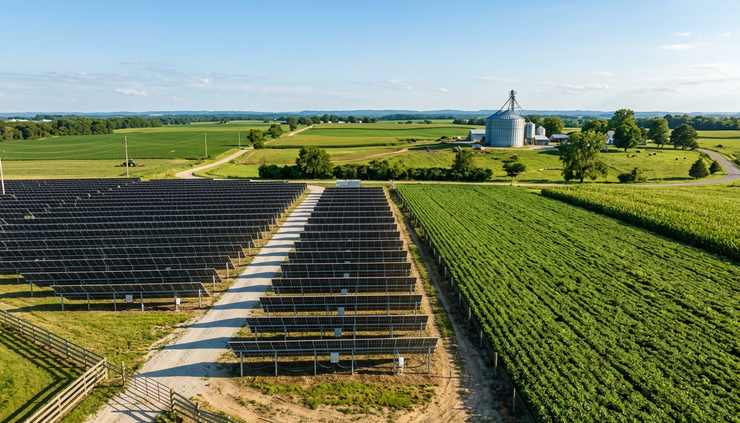
Land use is changing too. A single acre can sometimes serve more than one purpose. Solar panels can coexist with grazing or certain crops. Forests can provide timber, carbon storage, recreation, and habitat if managed carefully. Urban land can support housing, transit, trees, water capture, and local food projects when planned well.
The larger point is clear: land does not become limitless, but its value can multiply when managed with care.
What this means for jobs, power, and daily life
A more abundant resource economy will not affect everyone in the same way. It can lower some costs, create new jobs, and strengthen national resilience. It can also disrupt old industries and widen gaps if the benefits flow only to a few.
The labor market will change first.
Jobs tied to fossil fuel extraction, traditional manufacturing, trucking, construction, agriculture, power systems, recycling, and repair will all feel the shift. Some roles will decline. Others will grow. Many will change rather than disappear.
The economy will need more people who can install, maintain, build, repair, inspect, and operate physical systems. Electricians, welders, machinists, mechanics, grid technicians, construction workers, farmers, water system operators, and logistics workers may become even more central.
This is not only a software story. America’s limitless economy, if it arrives, will be built with tools, trucks, wires, pipes, panels, fields, factories, and skilled hands.
Households may see the change in practical ways:
Homes that produce part of their own power.
Vehicles that use electricity from a mix of local and grid sources.
Lower exposure to gasoline price swings.
More repairable appliances and devices.
More local food and energy choices.
Better insulation, heat pumps, and efficient water systems.
National power also changes. A country that can produce more of its own energy, recover more of its own materials, and grow more with fewer inputs has more room to act. It becomes less vulnerable to foreign supply shocks and price spikes.
That does not mean isolation. America will still trade. Modern supply chains are global, and many materials come from abroad. Yet a stronger domestic resource base gives the country more choices.
The biggest risk is that abundance becomes unequal. If cheap energy, clean water, safe housing, and modern infrastructure reach only wealthy regions, the economy will grow more divided. If older industrial towns get left out, the political backlash will be severe. If rural areas host energy and mining projects without sharing in the gains, trust will erode.
A limitless economy needs fair rules, not just better machines.
That means permitting systems that can build needed infrastructure without ignoring local concerns. It means training programs tied to real jobs. It means environmental standards that protect communities. It means markets that reward durability, repair, and lower waste.
The real limit is coordination
The United States is not running out of potential. It has energy, land, talent, capital, research, universities, entrepreneurs, workers, and a large consumer market. The challenge is turning those strengths into systems that work at scale.
The next economy will be shaped by a few hard questions:
Can the grid expand fast enough?
Can housing, transport, and energy planning work together?
Can recycling become easier and more profitable?
Can farms stay productive while protecting soil and water?
Can workers move into new trades without being abandoned?
Can local communities benefit from new projects?
Can America build faster without cutting corners?
These questions are less about physical scarcity and more about public capacity, trust, and execution.
The promise of a resource based economy is not that America can consume without consequence. That would repeat the mistakes of the past. The promise is that the country can create more value from less waste, more energy from renewable flows, more resilience from local systems, and more growth from smarter use of what already exists.
“Limitless” should mean less trapped by old limits, not free from responsibility.
America’s resource future will be decided in power lines, farms, recycling plants, water systems, factories, neighborhoods, and statehouses. The country already has many of the pieces. What matters now is whether it can connect them into an economy that creates abundance without burning through the foundations that make abundance possible.


Comments